

Every activist carries a theory of change — an assumption about how the world transforms. Most have never named it. Naming it is the first step toward choosing it deliberately instead of defaulting to it unconsciously.
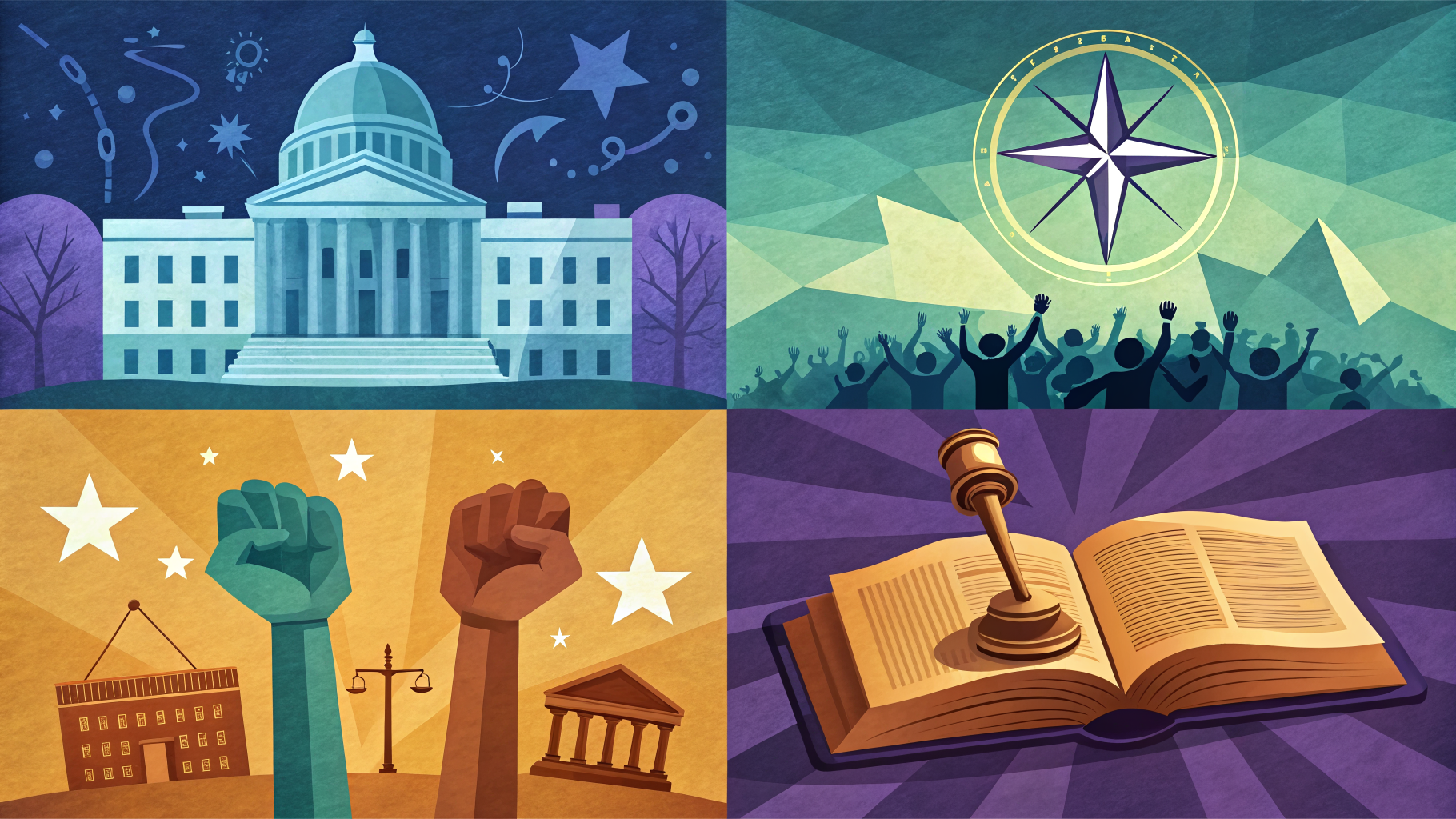
Four Theories of Change
Theories of change are not ideological commitments — they are strategic tools. Effective movements often deploy multiple theories simultaneously. The question is not "which is right?" but "which fits the conditions you face?"
Theory 1: Institutional Change (Inside Strategy)
Change happens when you reform the laws, policies, and institutions that govern society. You change the rules, and the rules change the behavior.
- Logic: If the problem is structural, the solution is structural. Pass better laws, elect better officials, appoint better judges.
- Strengths: Produces enforceable, durable change. Creates precedent. Scales through institutional reach.
- Limitations: Depends on access to institutional levers. Incremental. Can be reversed by subsequent administrations.
- Archetype fit: The Architect, The Diplomat, The Strategist
Theory 2: People Power / Disruption (Outside Strategy)
Change happens when ordinary people withdraw consent, disrupt normal operations, and make the status quo more costly than change.
- Logic: Institutions won't change voluntarily. You have to create a crisis that forces change.
- Strengths: Doesn't require institutional access. Can shift the Overton window. Builds solidarity.
- Limitations: Hard to sustain. Requires mass participation. Can produce backlash without institutional channels to capture gains.
- Archetype fit: The Agitator, The Organizer, The Guardian
Theory 3: Narrative Transformation (Cultural Strategy)
Change happens when you shift what people believe — when you change the story about who deserves what, what is possible, and what is "normal."
- Logic: Structural change won't stick if cultural assumptions haven't changed. You have to win hearts before you can win votes.
- Strengths: Deep and lasting impact. Hard to reverse. Creates the conditions for all other forms of change.
- Limitations: Slow. Hard to measure. Cultural shifts without structural changes can produce symbolic victories without material improvement.
- Archetype fit: The Storyteller, The Visionary, The Healer
Theory 4: Prefigurative / Community-Building (Infrastructure Strategy)
Change happens when you build the alternative — mutual aid networks, cooperative economies, community-governed institutions — that makes the unjust system less necessary.
- Logic: Don't fight the existing system; make it obsolete. Build the world you want and let people choose it.
- Strengths: Empowering. Immediate benefit to community. Doesn't depend on permission from power-holders.
- Limitations: Can become insular. May not address structural power that actively destroys alternatives.
- Archetype fit: The Guardian, The Healer, The Operator
Applied Exercise: Strategy Selection Simulation

Theory of Change Matchmaking
For each scenario, identify which theory of change (or combination) best fits — and explain why:
Reflection & Integration
Your Default Theory

Theory 1 (Institutional Change) is the foundation of the Legislative & Policy Strategy school. If your default is to change the rules, that school will teach you how — and when institutional strategy is and isn't appropriate.
Legislative & Policy Strategy